






Introduction: Currywurst, Berlin’s Beloved Street Food Icon
Currywurst is more than just a dish: it’s an urban legend, a cultural marker and a tasty ritual deeply woven into Berlin life. Emerging in the interwar years and skyrocketing in popularity after 1949, it has become the quintessential street snack—enjoyed at any hour, after a night out or during a quick break. In Berlin, currywurst cuts across social layers, generations and neighborhoods: from alternative Kreuzberg to the shopping sidewalks of Prenzlauer Berg, you’ll find it everywhere, always accompanied by the same recurring question: mild or spicy sauce?
This guide offers a detailed overview of the dish’s historical origins, recipes and iconic addresses around Berlin. The goal: to give you a complete approach blending history, a tasty route, exact addresses with indicative prices and opening hours, plus local tips to make the most of the experience. Whether you’re a curious traveler, a food lover, or a nostalgic Berliner, this piece aims to place currywurst in its historical and social context while providing practical stops so you can taste it like an insider.
We’ll cover the genesis and evolution of currywurst, the different schools of preparation (grilled vs. fried sausage, homemade vs. industrial sauce), and how a handful of stands and imbiss (small fast-food places) have risen from humble counters to institutions. We’ll detail several must-visit spots: Curry 36 in Kreuzberg, Konnopke’s Imbiss in Prenzlauer Berg, Bergmann Curry on Bergmannstraße, and the legacy of the Deutsches Currywurst Museum. Each listing includes practical info (full address, typical price ranges, hours), a sensory description and local tips for getting the best out of your visit.
Finally, the guide stresses how to eat currywurst the Berliner way—fries or not, in a bread roll or in a cardboard tray—and what to drink with it (local beer, cola, or just water). We’ll also share tips to avoid tourist traps and how to spot an authentic stand. Though simplicity defines it, currywurst reveals a lot about German popular culture: resilience, inventiveness and the knack for turning simplicity into myth. Get ready for a full immersion—visual, aromatic and gustatory—into one of Berlin’s most tangible symbols.
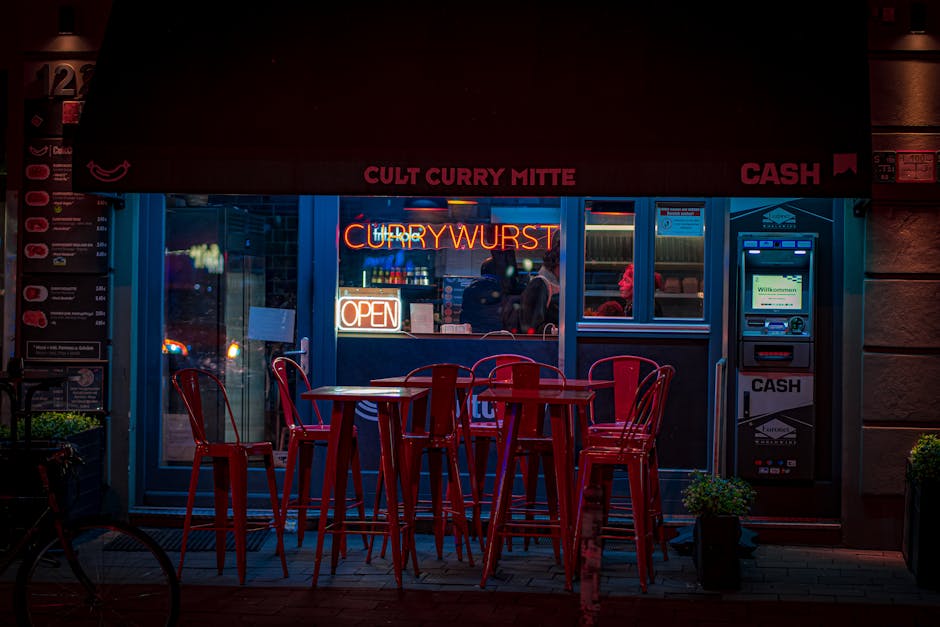
History and Origins: From Postwar Street Food to National Symbol
The story of currywurst is tightly bound up with the social and economic shifts in postwar Germany. The most widely accepted origin tale says that in 1949 Herta Heuwer, a street vendor in West Berlin, mixed tomato sauce with curry powder—brought in by British soldiers—to create a sauce served with sliced sausage. Initially operating in the British sector, Herta is said to have sold her creation on Kantstraße, near Charlottenburg. She even registered the original recipe as “Chilli Sauce Rezept” (a claimed patent) and earned local recognition. This story highlights the cultural blending of the era: imported ingredients, postwar constraints and culinary resourcefulness.
That said, the history isn’t linear or singular. Other accounts claim versions of currywurst existed in canteens and market stands before the dish became standardized. Regardless, the recipe quickly established itself as an inexpensive, filling street food—popular for its simplicity and its portability, often eaten standing up with a roll or fries. In the decades that followed, currywurst moved beyond a mere snack to become an identity marker: it appears in literature, songs and Berlin’s popular culture.
Success brought many variations: from the classic “Berliner Art” currywurst (sausage cut into slices and served with a tomato-curry sauce) to more contemporary takes (artisan sauces, premium sausages, vegetarian and vegan alternatives). A recent revival by chefs and food trucks has amplified creativity: currywurst with spiced mustard, sweet-and-spicy versions, or even gourmet plated presentations. Through all this, the essence stays the same: a sliced sausage, a curry sauce, and the conviviality of fast service.
On a cultural level, currywurst has been celebrated through temporary museums and exhibitions—the Deutsches Currywurst Museum, open from 2009 to 2018 (Schützenstraße 70, 10117 Berlin), helped codify this heritage before it closed. Even shuttered, the museum left a strong cultural legacy: archives, popular recipes and anecdotes about the role of currywurst in everyday Berlin life.

Notable Spots: Stands and Imbiss You Shouldn’t Miss
Berlin is full of stands and imbiss where currywurst is elevated to local pop art. Here are four essential spots, with exact addresses, typical prices, hours and sensory descriptions.
-
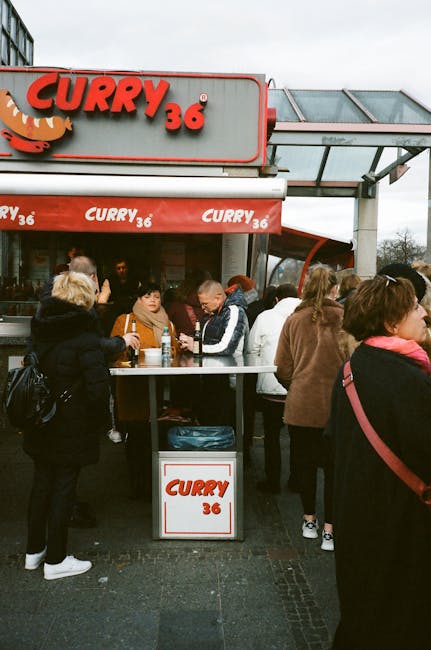
Curry 36
Address: Mehringdamm 36, 10961 Berlin (Kreuzberg).
Price: Classic currywurst around €3.50; currywurst with fries about €5.00.
Hours: generally open daily 09:00–04:00 (late-night hours may vary by season).
Description: A true Kreuzberg institution, Curry 36 is often packed—especially in the evenings and on weekends. The sausage is grilled, the sauce slightly sweet and spicy, served in a tray with a generous hit of ketchup-curry. The vibe is classic: standing customers, neon lights, and a steady queue that speaks to its popularity. Tip: if you come after midnight expect a longer wait; get the “mit Pommes” (with fries) for the complete experience. -
Konnopke’s Imbiss
Address: Schönhauser Allee 44b, 10435 Berlin (under the elevated U-Bahn at Eberswalder Straße).
Price: Simple currywurst around €3.00; currywurst with fries about €5.50.
Hours: generally open daily 10:00–20:00 (check hours on holidays).
Description: Konnopke’s is one of Berlin’s oldest stands (founded in 1930). Located beneath the U-Bahn tracks, it offers a currywurst with a robust, slightly smoky sauce. The experience here feels historic: the spot has weathered Prenzlauer Berg’s changes and remains a locals’ meeting place. Tip: order “mit scharf” if you like it spicy; grab your portion and enjoy it on the benches in the nearby park. -
Bergmann Curry
Address: Bergmannstraße 90, 10961 Berlin (near the Bergmannstraße Market and Markthalle Neun).
Price: Classic currywurst around €4.00; special portions €6.50–€8.00 depending on toppings.
Hours: generally open 11:00–22:00 (may vary with street events and the market).
Description: Located in lively Kreuzberg, Bergmann Curry focuses on local ingredients and house-made sauces. The atmosphere is friendly, often popular with families and local foodies. Portions are generous, and choices of sauce intensity let you customize your tasting. Tip: pair your currywurst with a local craft beer from nearby bars for a truly Berlin snack. -
Imbiss 204 (modern alternative example)
Address: Oranienstraße 204, 10969 Berlin (Oranienstraße, Kreuzberg).
Price: Gourmet currywurst €5.50–€7.00 depending on accompaniments.
Hours: generally open 12:00–01:00.
Description: Representing a new wave of stands, places like this serve modernized versions: organic sausages, complex house-made sauces and vegetarian options based on tofu or seitan. Prices are higher, but the quality reflects it. Tip: try the vegan currywurst if you want to compare how well meat alternatives hold up in flavor.
Flavors, Techniques and Secrets: How to Spot an Excellent Currywurst
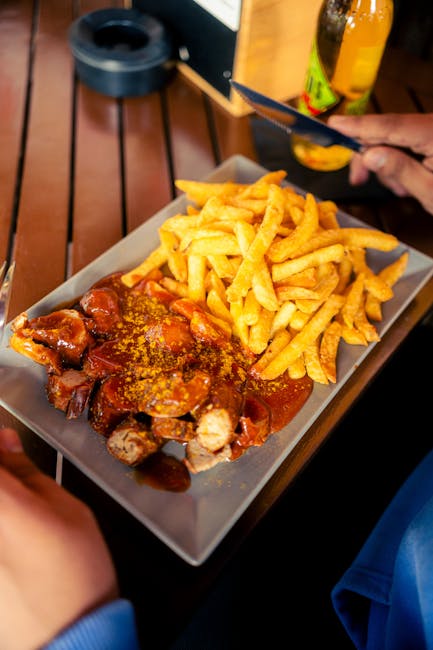
The quality of a currywurst is judged by several factors: the sausage, the cooking method, the sauce and the service. The ideal sausage is firm, well-seasoned (traditionally pork-heavy), with a skin that crisps slightly during cooking. Cooking methods vary widely: some vendors fry the sausage for a more uniform, fattier texture; others grill it over flame for a smoky note. Purists argue that grilled is superior because it adds character without masking the sausage’s meatiness.
The sauce is the heart of the matter. A typical sauce mixes concentrated tomato, vinegar, sugar, paprika and a touch of curry powder. Commercial sauces tend to be sweeter and more uniform, while artisanal sauces offer more complex profiles: smoky hints, heat, or even a bright tang. In Berlin you’ll also find regional or house sauces boosted with sautéed onion, mustard or exotic spices. A good stand will serve a balanced sauce—not too sweet, not too acidic—with a distinct curry presence that doesn’t overwhelm.
Other details to watch: how the sausage is cut (tight slices or cross-scored), the presentation (tray, roll or plate), and the accompaniments (thin fries, Kartoffelsalat/potato salad, bread). Locals often advise avoiding overly touristy stands (near major attractions) where quality can be standardized. Look for local queues—they’re a reliable indicator of authenticity. To fully appreciate the flavors, taste the sausage alone first, then with sauce, and finish with the side—this helps you perceive the different flavor layers.
Practical Tips and a Taster’s Guide for Berlin
Heading to Berlin to try currywurst comes with a few practical pointers to maximize the experience. First, hours: stands rarely close early—many stay open until midnight or later, especially in nightlife neighborhoods like Kreuzberg and Friedrichshain. However, some traditional stands close around 20:00 (e.g., Konnopke’s). Always check opening times on Google Maps or official pages before you go, especially on public holidays.
Budget: Expect to pay between €3.00 and €8.00 per portion depending on the place and extras. Stands near major tourist sites may charge slightly more. For a full meal (currywurst + fries + drink), budget roughly €6.00–€10.00.
How to eat it: Currywurst is traditionally eaten standing up, often using a small wooden fork (Spieß). If you’re in a group, order multiple portions to taste different sauces. Locals often pair it with draft beer (Pils or a Berliner Weisse) or cola. If you’re vegetarian or vegan, ask—many imbiss now offer modern alternatives.
Local tips:
- Avoid stands right next to heavily touristy zones at lunchtime: quality can be lower there.
- Follow local queues and word-of-mouth: a busy stand is usually a sign of freshness.
- Ask for “mit scharf” for a spicier sauce, or “ohne scharf” for a milder one.
- If sharing, order separate portions so you can compare sauces and textures.
- Bring cash: some stands still accept only cash, though card payments are becoming more common.
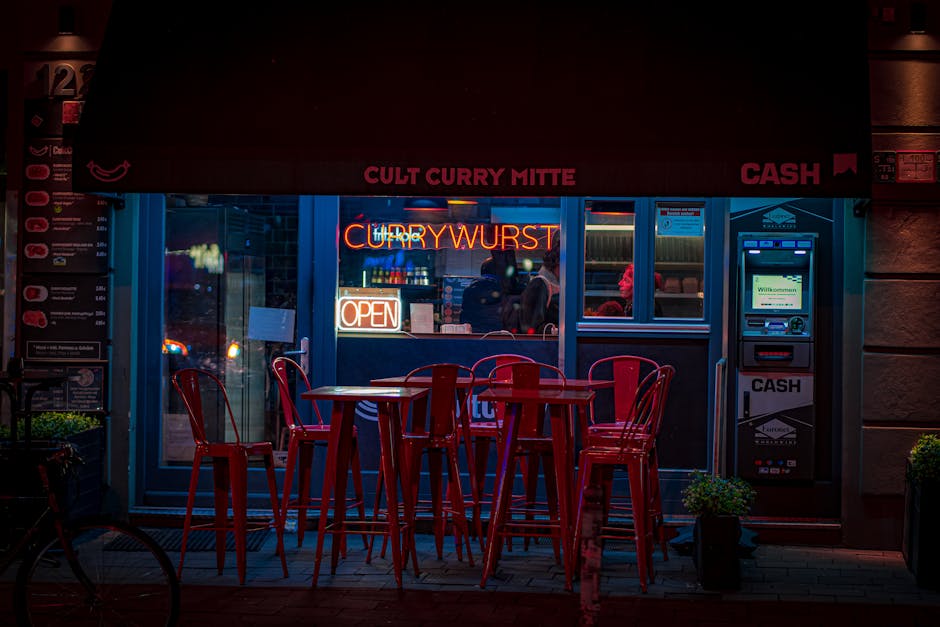
Conclusion: From Street Stall to Legend — Currywurst as a Mirror of Berlin
Currywurst embodies Berlin’s talent for turning simplicity into culture: a cheap street food becomes, through its story, places and popularity, an urban myth. Between postwar memory, culinary innovation and popular heritage, currywurst also tells the story of a city in constant flux. The stands and imbiss we covered—Curry 36 (Mehringdamm 36, 10961 Berlin), Konnopke’s Imbiss (Schönhauser Allee 44b, 10435 Berlin), Bergmann Curry (Bergmannstraße 90, 10961 Berlin)—are must-stops for anyone who wants to understand this story through taste. Each spot offers a different interpretation: house sauces, modern twists, and traditions rooted under the U-Bahn.
Beyond the locations, it’s the tasting ritual that matters: knowing how to recognize a good sausage, appreciating the complexity of a curry sauce, and soaking up the imbiss atmosphere. The practical advice—hours, prices, and expected behavior—will help you dive into the experience like a local. And if you’re keen to dig deeper, the memory of the Deutsches Currywurst Museum (formerly Schützenstraße 70, 10117 Berlin), although closed now, remains a source of archives and anecdotes highlighting the dish’s cultural importance.
In the end, eating a currywurst in Berlin is joining a collective ritual: crowding around a counter, exchanging a few words in line, and savoring a small, comforting bite. Whether you’re a flea-market hunter, a student, a tourist or an artist, currywurst is one of those rare foods that crosses social borders without losing its uniqueness. Take the time to try different versions, note your favorites, and most of all, let yourself be surprised by the variety and depth of a seemingly modest dish—rich in stories and flavor. Enjoy and happy Berlin tasting!